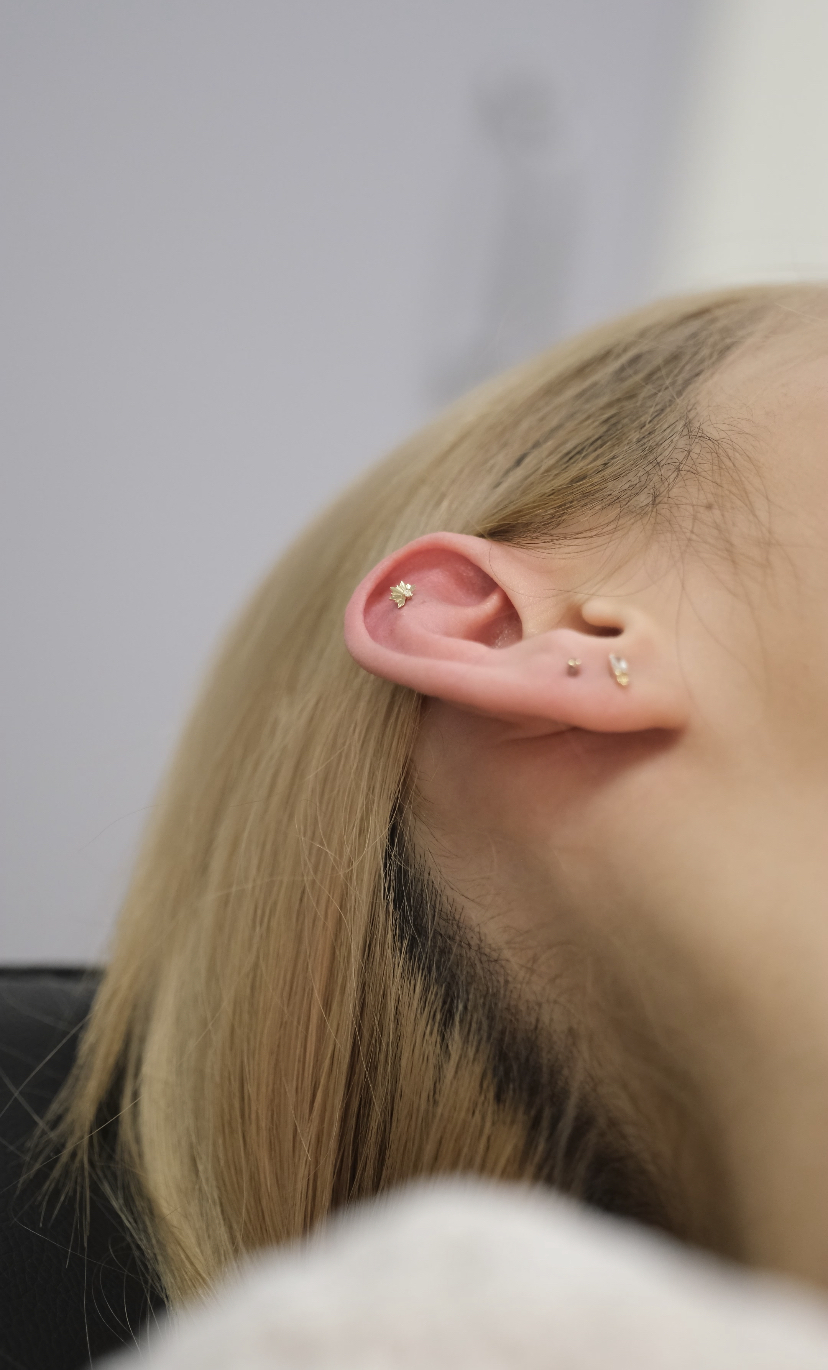
Piercer’s Perspective on Hypertrophic Scars and Keloids
Understanding the Difference
One of the most common misunderstandings after getting a piercing is when clients notice a small raised bump near their piercing and immediately assume it is a keloid. In reality, most of these cases are not keloids but hypertrophic scars — sometimes called “piercing bumps” or “granulation tissue.”
Hypertrophic Scars
-
Common during the healing phase of a piercing
-
Stay within the boundary of the original wound
-
May shrink naturally over time
-
Soft, pink or red, and may bleed easily due to new capillaries
-
Triggered by irritation, such as excessive cleaning, dirt, pressure, or friction
Keloids
-
Less common but more persistent
-
Grow beyond the boundaries of the original wound
-
Firm, raised, and often darker in color
-
May cause itching or mild pain, especially around the edges
-
Strongly related to genetics and skin type, more common among individuals of African, Asian, or darker skin tones
-
People with a history of keloids elsewhere on their body are more likely to develop them after a piercing
Why Do Bumps or Scars Form
According to the National Center for Biotechnology Information (NCBI) and dermatology research, both hypertrophic scars and keloids result from excess collagen production after skin injury.
When the body’s healing response becomes overactive, it builds too much collagen in the area, forming raised tissue.
Common triggers include:
-
Systemic inflammation (some individuals naturally have more reactive skin)
-
Hormonal changes (teenagers and young adults are more prone)
-
Mechanical tension (tight or heavy jewelry pressing against the wound)
-
Genetic predisposition (especially for keloids)
Epidemiology:
-
Keloids: More common among African and Asian populations
-
Hypertrophic scars: More frequent among younger people aged 11–30 due to active collagen regeneration
-
Post-surgical and burn wounds show high rates of hypertrophic scar formation (up to 90%)
Piercer’s Approach and Recommendations
A. Daily Care
-
Avoid touching or twisting the piercing unnecessarily.
-
Rinse gently with sterile saline or professional aftercare solution after showers.
-
Dry thoroughly using a clean tissue or gauze — never a towel.
-
Do not make homemade saltwater, as inconsistent concentration can worsen irritation.
B. When a Hypertrophic Bump Appears
-
Rinse the area twice a day with saline for at least three minutes.
-
Avoid sleeping on the pierced side to reduce pressure.
-
If there is no improvement after one week, return to your piercer. A professional may apply a medical-grade silicone disc to gently compress the bump and reduce irritation.
-
Hypertrophic scars usually improve within three to five weeks depending on size and location.
C. If a Keloid Is Suspected
Consult a licensed dermatologist for evaluation. Treatment options may include:
-
Corticosteroid (cortisone) injections
-
Silicone gel or pressure patches
-
Cryotherapy (cold therapy)
-
Surgical excision (though recurrence is common without follow-up care)
Common Questions
Q1: Why do hypertrophic scars bleed easily?
Because the tissue is rich in new capillaries but lacks protective skin covering, even light friction can break small vessels.
Q2: How can I tell the difference between a hypertrophic scar and a keloid?
-
Hypertrophic scar: confined to the original wound, may shrink over time.
-
Keloid: grows beyond the wound boundary and continues to enlarge.
Q3: Can I still get new piercings if I’ve had a bump before?
If you’ve had a keloid, proceed with extreme caution and inform your piercer.
If it was only a hypertrophic bump, proper aftercare and professional supervision usually keep future piercings safe.
Final Thoughts
Hypertrophic scars are a common and manageable part of the healing process. They represent the body’s natural effort to repair itself, even if they can be frustrating.
Keloids, on the other hand, are less common, genetically influenced, and typically require medical intervention.
As professional piercers, our role extends beyond technique — it includes educating clients, reducing fear and misunderstanding, and guiding them through safe, evidence-based aftercare.
Healing takes patience, but with proper care, most bumps can resolve beautifully and leave the piercing healthy and secure.


References:
-
Carswell, L. (2023, August 8). Hypertrophic Scarring and Keloids. StatPearls, NCBI Bookshelf. https://www.ncbi.nlm.nih.gov/books/NBK537058/
-
Wang, S. H. (n.d.). Granulation Tissue in Wound Healing. https://www.skin168.net/2016/04/granulation-tissue.html
All content © Yuffy Hon Piercing Lab Studio. Please credit and link back when sharing.
